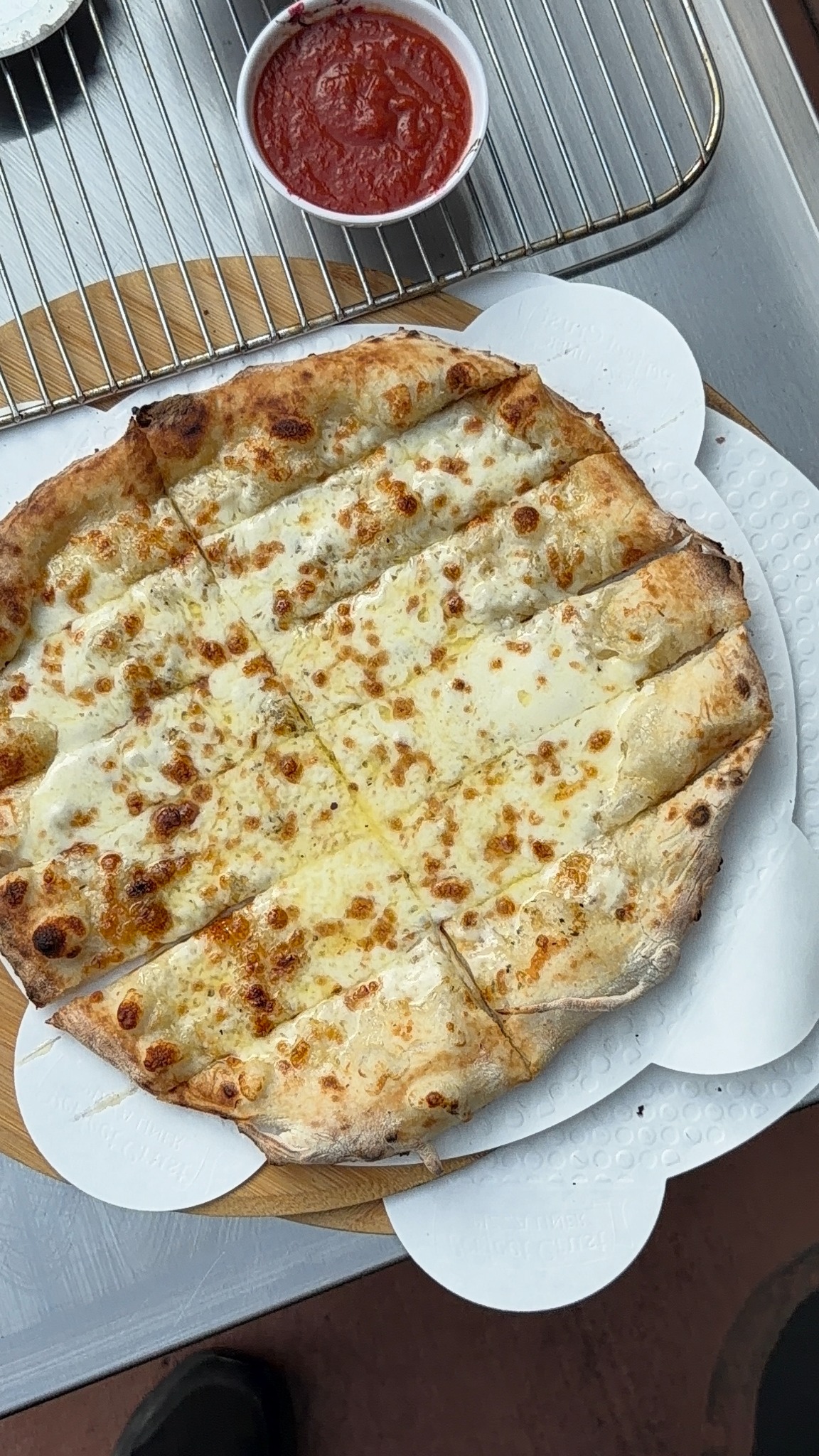
The pizza leaves the oven with a browned bottom and the texture you wanted. Fifteen minutes later, someone opens the box and lifts a soft, drooping slice.
It is tempting to blame the dough. But something important happened after baking: the pizza entered a different environment.
A takeout box changes how heat and moisture leave the pizza. To improve the result, evaluate the bake, toppings, packaging and travel time together.
This matters as crisp crust gets renewed attention. In a September 30, 2026 Pizza Today column, Scott Wiener describes interest in crisp styles ranging from tavern pizza to bar pies. That is a useful industry observation, not a guarantee that one style suits every business. It raises a practical question: can the texture you create survive the trip home? [1]
Why does pizza soften after baking?
A crisp crust is relatively dry and brittle. Water can soften that structure. Bread research describes moisture movement from the interior toward the crust and the resulting loss of crispness. Those studies help explain the mechanism; they do not establish a universal delivery time for pizza. [2, 3]
Pizza also carries sauce, cheese and toppings. In a closed package, water vapor released by hot food has less opportunity to escape; some can condense as surfaces cool. The practical inference is that we need to consider moisture within the food and its surrounding package—not just visible droplets on a lid.
That does not mean every soft pizza has the same problem. A base that was never crisp needs a different investigation from one that starts crisp and softens during transport.
Start by separating two problems
Was the bottom already soft at the oven?
Look underneath before the pizza goes into its box. Document the bake time, the condition of the baking surface, the center thickness and the topping load.
If the pizza is already too soft for your intended style, a packaging change is unlikely to solve the entire problem. First establish a repeatable bake that produces the texture you want.
Did the texture change in the box?
If the fresh pizza meets your target but the boxed pizza does not, investigate the journey. How long does it wait before pickup? Does it travel inside a delivery bag? Are boxes stacked? Is your assessment based on a quiet kitchen test or an actual service routine?
Write those conditions down. “It went soggy” describes an outcome; it does not identify the cause.
Does a vented pizza box solve the problem?
Ventilation is one tool. Packaging manufacturer Smurfit Kappa lists moisture-removal ventilation holes among its pizza-box features. That supports the purpose of the design, not a claim that a particular box will outperform yours. [4]
The operating challenge is balancing texture and temperature. An arrangement that releases more moisture may also change heat retention. Evaluate both outcomes in your actual bag, stacking pattern and journey.
Use packaging designed for the application. Compare complete, usable arrangements rather than improvising an open box that would not protect the food during normal handling.
There is no defensible universal rule that every pizza needs the same vent area, liner or delay before boxing. Those are variables to test.
Why I use Perfect Crust Pizza Liners
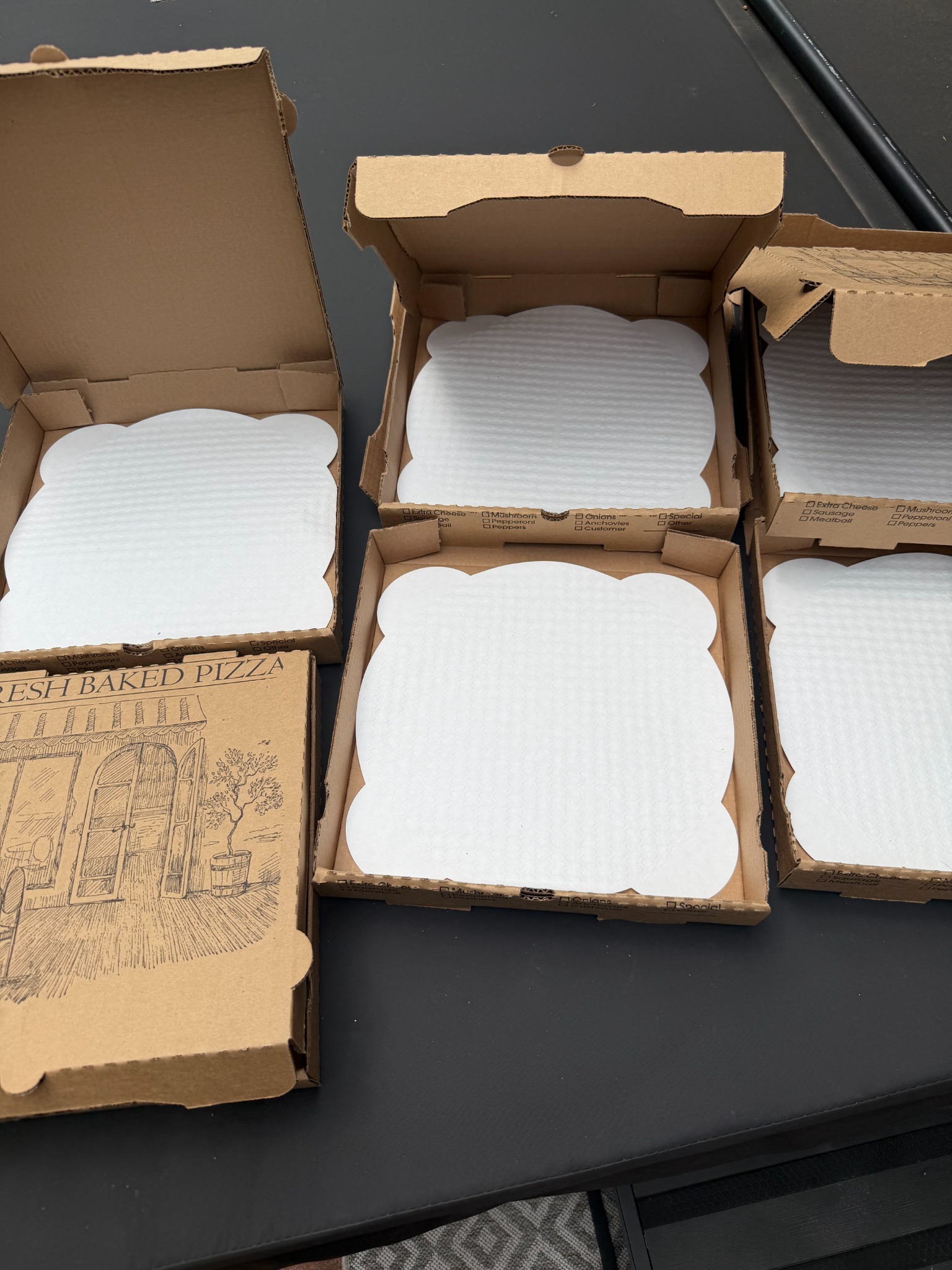
For me, this is more than a theoretical packaging discussion. During concept testing for my first pizzas, I started with plain corrugated pizza boxes and Perfect Crust Pizza Liners. I have stayed with those liners ever since.
Based on that experience, I consider them my gold standard for this part of the process. That is my assessment as a food scientist, chef and small-business owner: the liner earns its place because of the finished pizza I want my customer to experience.
EVC: elevation, ventilation and circulation
Perfect Crust describes its approach as EVC—elevation, ventilation and circulation. Its embossed bumps raise the pizza above the liner's lower surface, creating space beneath it. The company's explanation emphasizes ventilation and air circulation; its product page also describes grease and excess-moisture absorption. These are the manufacturer's descriptions of how its design works. [5], [6]
What interests me is that the surface underneath the pizza has a job to do. It is part of how I manage the product after the bake.
Operators have several approaches: flat cardboard circles, single-faced corrugated liners, wax paper, or the pizza box itself, sometimes with a little cornmeal underneath. Those arrangements are not identical. A flat support, a fluted liner and an embossed liner create different contact surfaces. Wax paper does not create a raised structure, and cornmeal does not reproduce an engineered liner's geometry.
That does not establish a universal ranking of every product in those categories. It gives us practical questions: what supports the pizza, what space remains beneath it, and how does the finished pizza eat after the journey?
The experience I am paying to protect
My concept testing gave me confidence in the Perfect Crust liners, and I have never looked back. I want a good experience for the customer who eats right away, the customer who drives home, and the customer who does not open the box immediately.
Those are the situations I have in mind when I choose my packaging. I am not claiming that a liner keeps pizza unchanged indefinitely. I am saying that, in my experience, this liner helps protect the finished product I worked to create.
For me, the additional cost per box is worthwhile. Customers may never identify the liner as the reason they enjoyed the pizza. They notice the crust, the texture and whether the pizza meets their expectations. A better crust can be part of what makes the whole pizza feel better than another takeout pizza they have received.
That is why packaging belongs in the quality budget. The recipe does not stop mattering when the oven door opens, and product development should not stop there either.
You can review the design and available formats on the Perfect Crust Pizza Liners product page. My experience is a reason to consider a trial in your own operation, not a substitute for evaluating your own pizza, box and delivery routine.
Toppings belong in the investigation
Before changing flour or fermentation, make sure the pizzas being compared are actually comparable.
Weigh the sauce and cheese. Standardize vegetable preparation and draining. Record whether toppings are added before or after baking. Keep the amount and distribution consistent.
Start with your simplest representative pizza, then repeat with a heavily topped item. A packaging choice that works for a cheese pizza has not yet been validated for every pizza on the menu.
Avoid “fixing” several things simultaneously. If you reduce sauce, change the box and bake longer in one trial, a better result will not tell you which change mattered.
A practical takeout test for the Green Light Lab
The structured comparison below is a proposed next step. My earlier concept testing informed my choice of Perfect Crust; this is not a report of a controlled head-to-head trial against every alternative.
Compare your current packaging with one alternative. Keep the dough batch, ball weight, opening diameter, topping weights, oven process and slicing routine consistent.
Choose evaluation times that reflect your operation. For an initial trial, fresh from the oven, 10 minutes and 20 minutes can be useful checkpoints. These are experimental intervals, not food-safety holding limits or promises about acceptable quality.
Use separate matched pizzas for each boxed time point. Repeatedly opening the same box changes the conditions you are trying to measure. Include a fresh reference from each bake group so an inconsistent bake does not masquerade as a packaging effect.
At each checkpoint, record:
- Bottom crispness, with clearly defined descriptions such as crisp fracture, mixed crisp-and-soft, or fully flexible.
- Rim texture, center firmness and any wet patches.
- Product temperature measured at the same defined location with the same method.
- Lid condition and the condition of the pizza-box contact surface.
- Overall eating quality: would you be pleased to receive this pizza?
Use coded samples where practical so tasters do not know which box you hope will win. Repeat on another day and reverse the baking order. A consistent pattern is more useful than one dramatic photograph.
What does a packaging change cost?
For a small business, a packaging improvement has to earn its place in the process.
Suppose an alternative adds $0.20 per order. Across 100 orders, that is $20 in additional packaging expense. This is illustrative arithmetic, not a supplier quote or a prediction of your results.
Ask what that extra cost buys. Better eating quality? Fewer complaints? More assembly time? Additional storage space? Does it improve the pizza enough to justify its operational cost?
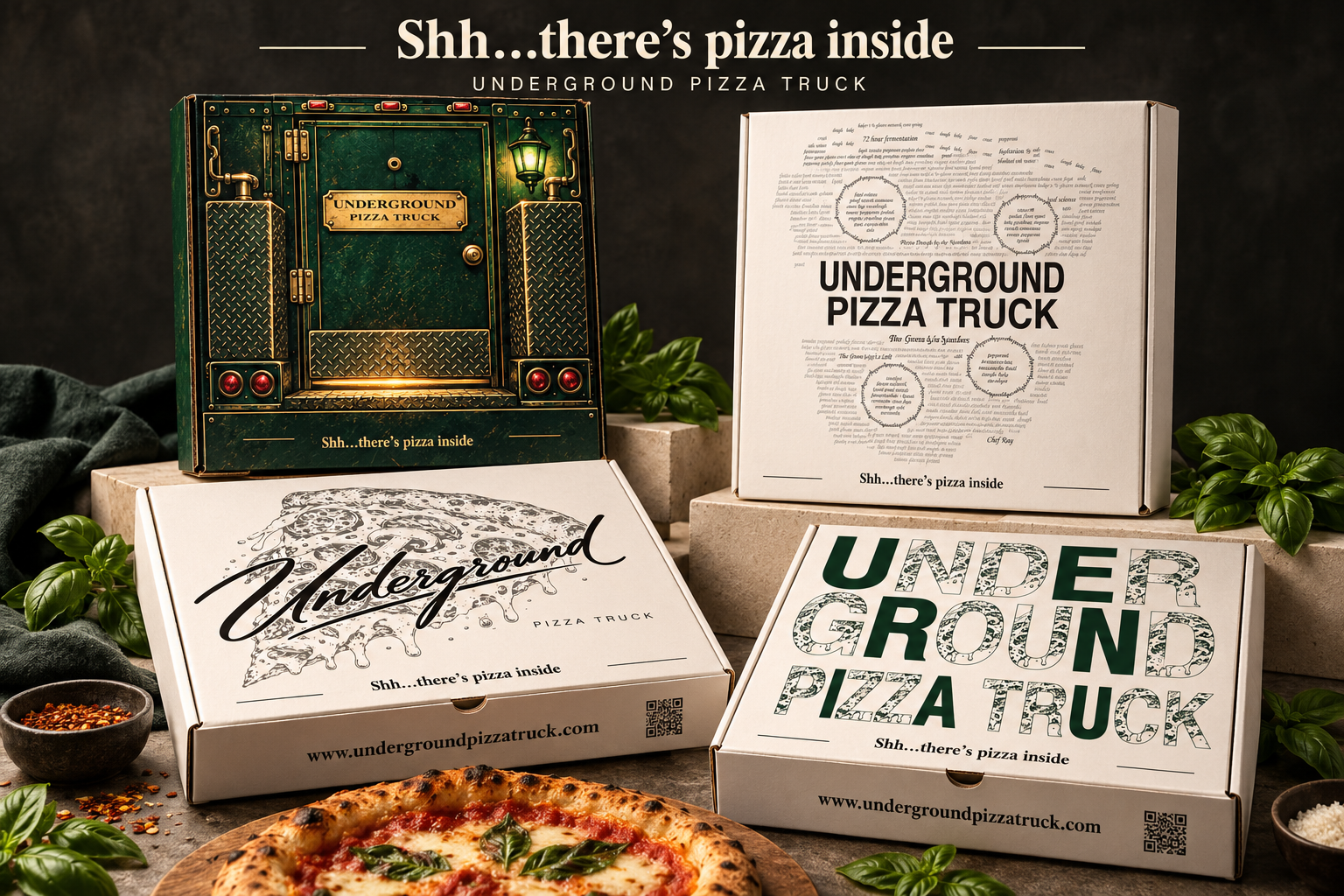
At Underground Pizza Truck, my planned $15, 12-inch cheese or pepperoni pizza has to communicate value through ingredients, handmade dough, a 72-hour fermentation and the experience. The packaging decision belongs in that same conversation. The customer experiences the pizza at the first bite, not at the moment I admire it coming out of the oven.
Three assumptions worth testing
| Assumption | Better question |
|---|---|
| A soft takeout pizza needs a new dough recipe. | Was it crisp before boxing, and when did it change? |
| More ventilation is always better. | What happens to both texture and temperature in this complete delivery setup? |
| A good cheese-pizza trial validates the whole menu. | Does the result hold for the pizzas with heavier or wetter toppings? |
The takeaway
Treat the time between the oven and the first bite as part of product development.
Start with a repeatable pizza. Test one packaging change. Measure it at the time the customer would eat it. Then decide whether the improvement deserves a place in your operation.
That is the Green Light Lab approach: understand the variable, document the result and make the next adjustment for a reason.
For the formulation side of that work, explore Pizza Dough by the Numbers and the companion Green Light Lab Pizza Dough Logbook. For help connecting a recipe to a repeatable commercial process, learn about Fire In The Kitchen's product and recipe development services. Follow The Green Light Lab Podcast for the companion discussion and future kitchen trials.
© 2026 Ray Sierengowski / Fire In The Kitchen, LLC. All rights reserved. For republication permission, contact ray@fireinthekitchen.com.
Sources
- Scott Wiener, “Making Pizza Trends Our Friends,” Pizza Today, September 30, 2026. Used for the dated industry observation about crisp styles, not quantitative market-size claims.
- Yi Chen and colleagues, “Crust treatments to reduce bread staling,” Current Research in Food Science, 2021. Open-access text. Bread research; application to pizza is a mechanism-based interpretation, not a pizza delivery trial.
- Anita Hirte and colleagues, “Does crumb morphology affect water migration and crispness retention in crispy breads?”, Journal of Cereal Science, 2012. Research on moisture transport and bread structure.
- Smurfit Kappa, Pizza Boxes, checked October 5, 2026. Manufacturer description of ventilation features; not independent comparative performance evidence.
- Perfect Crust, Pizza Liners, checked October 5, 2026. Manufacturer description of embossed bumps and absorption. No specific temperature-retention claim is adopted in this article.
- Daniel Thor / Bellissimo Foods, “Secret to Perfect Crust Every Time,” reproduced on Perfect Crust's In the News page, checked October 5, 2026. Source for EVC terminology and the manufacturer's hosted explanation. Not independent evidence of superiority or repeat-purchase effects.

About the author
Ray Sierengowski
Ray is a food scientist, chef, product developer, author, and founder of Fire in the Kitchen, LLC. He brings more than 30 years of experience in food development, manufacturing, commercialization, and culinary innovation.